Macular Degeneration FAQ: Your Top Questions Answered
Learning that you or someone you love has macular degeneration raises many questions. This page answers the most common ones in plain language, based on eye-care organizations and major clinical trials. It is general information, not medical advice, and an eye doctor should guide any diagnosis or treatment decision.
- AMD affects central vision, and early stages may cause no symptoms, so regular dilated eye exams matter.
- The AREDS and AREDS2 formulas were studied in people with intermediate AMD or advanced AMD in one eye, not as general prevention for everyone.
- Wet AMD is managed by an eye doctor, and injections are a medical treatment, not something supplements replace.
- The Amsler grid is a simple home check, but it does not replace an eye exam.
- Evidence for other supplements, such as saffron, is limited and still developing.
How to use this page
Age-related macular degeneration (AMD) affects the macula, the part of the retina that handles sharp, central vision. It is a leading cause of vision loss in older adults, and it mainly affects central vision rather than side vision[1].
Supplements come up often in AMD searches, so several answers below cover what the research does and does not show. For broader background, see our guide to eye health. No supplement replaces regular dilated eye exams or the treatment plan from a retina specialist.
When to call an eye doctor
Contact an eye doctor promptly if straight lines look wavy, a dark or blank spot appears in the center of your vision, or your vision changes suddenly. Sudden changes can signal wet AMD, which needs timely evaluation[2].
Only an eye exam can tell AMD from other causes of vision problems. Do not rely on supplements, home tests, or online articles to diagnose yourself.
Eye supplements we have reviewed
Want to compare products? Read what the research says about nutrients for macular degeneration first, then compare the products below.
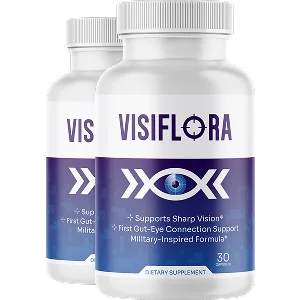
VisiFlora
Listed ingredients: Astaxanthin, Vitamin C, Vitamin E, Copper, Selenium, Chromium
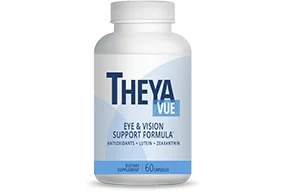
TheyaVue
Listed ingredients: Lutein, Zeaxanthin, Vitamin C, Calcium, Vitamin E, Bilberry Extract
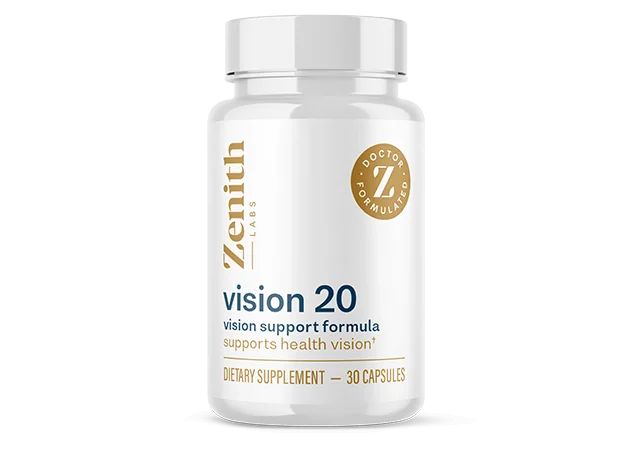
Vision 20
Listed ingredients: Lutein, Zeaxanthin, Zinc, Beta-carotene, Lycopene, Rose Hips
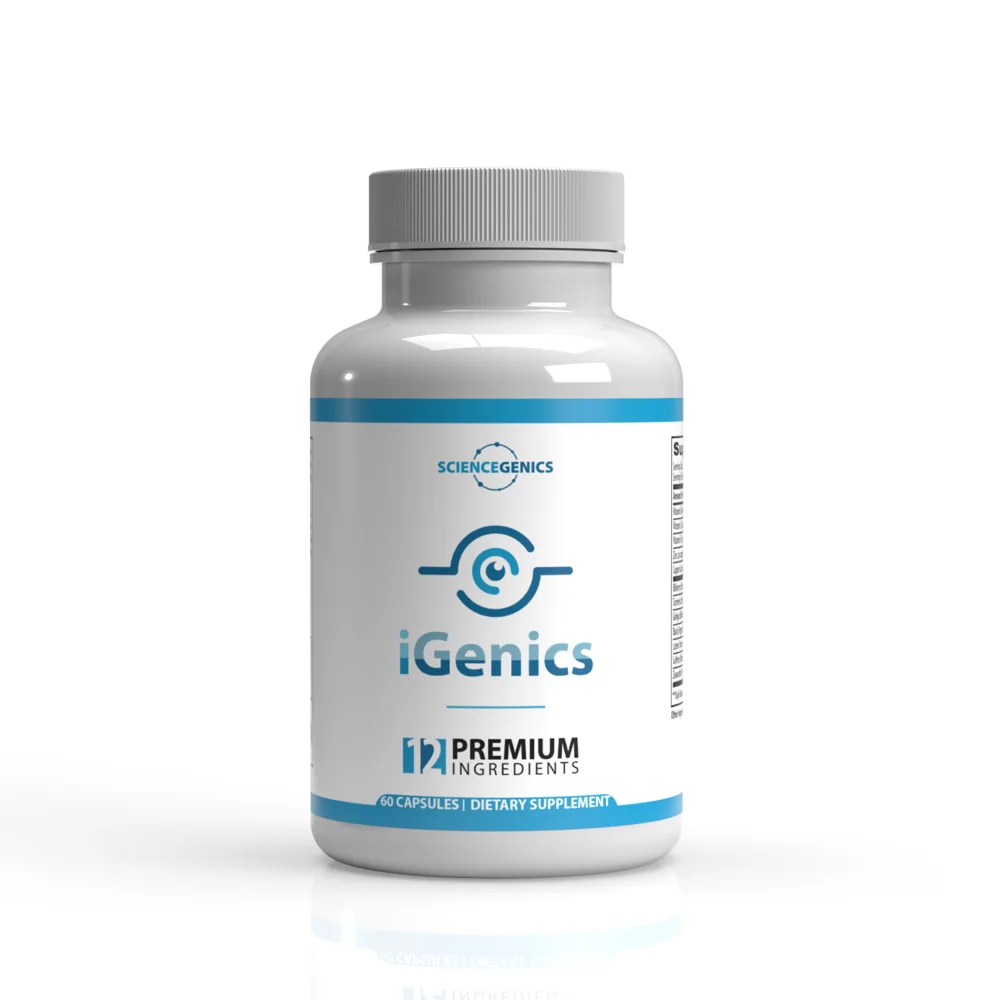
iGenics
Listed ingredients: Ginkgo biloba, AREDS-2 formula ingredients (not itemized), Bilberry, Saffron, Turmeric + BioPerine
Frequently asked questions
What is macular degeneration?
Macular degeneration, usually age-related macular degeneration (AMD), is an eye condition that damages the macula, the central part of the retina. This can blur or distort central vision, which makes reading, driving, and recognizing faces harder[1]. It generally does not cause total blindness, because side (peripheral) vision is usually preserved[2].
What is the difference between dry and wet macular degeneration?
Dry AMD is the more common form and develops gradually as the macula thins and deposits called drusen build up. Wet AMD is less common but can progress faster, because abnormal blood vessels grow under the retina and may leak fluid or blood[1]. Dry AMD can sometimes progress to wet AMD, so ongoing monitoring is important[2].
What are the early signs of macular degeneration?
Early AMD often has no symptoms. Later signs can include blurry vision, needing more light to read, colors that look less vivid, and straight lines that look wavy or bent[2]. Other conditions, such as cataracts, can also blur vision, so an eye exam is needed to find the cause[2].
What are the main risk factors for AMD?
Age is the strongest risk factor, and the risk rises notably after age 50[1]. Family history and genetics, smoking, and race also play a role, with AMD being more common in white people[1]. Smoking is a risk factor you can change, which makes quitting one of the most practical steps to discuss with your doctor[1].
What is an Amsler grid and how do I use it?
An Amsler grid is a square of evenly spaced straight lines with a dot in the center. You look at the dot with one eye covered, using your usual reading glasses, and note whether any lines look wavy, blurry, or missing[2]. If you notice changes, contact your eye doctor right away. A normal-looking grid does not rule out AMD, so it should supplement, not replace, professional exams[2].
Do AREDS supplements help with macular degeneration?
The original AREDS trial tested a high-dose combination of vitamins C and E, beta-carotene, and zinc. In people with intermediate AMD, or advanced AMD in one eye, the formula was associated with a reduced risk of progressing to advanced AMD[3]. It was not shown to help people with no or very early AMD, and it is not a cure or a way to restore vision[4]. Ask an eye doctor whether your stage of AMD makes the formula relevant for you.
What did AREDS2 change?
AREDS2 tested adding lutein and zeaxanthin and omega-3 fatty acids to the original formula. Omega-3s did not provide an additional benefit[5]. Lutein and zeaxanthin were studied as possible replacements for beta-carotene, and the National Eye Institute describes the updated formula as a reasonable option for people at risk of progression[4]. Beta-carotene was a concern because of its link to lung cancer in current and former smokers[4].
Is the zinc in AREDS-type formulas safe?
Zinc is an essential mineral, but high intakes can cause problems. The NIH sets an upper limit of 40 mg per day for adults from all sources, and too much zinc over time can interfere with copper absorption[6]. Because AREDS-type doses are high, they are best used under an eye doctor's guidance, especially if you take other supplements or medicines.
When are injections needed for macular degeneration?
Injections are used for wet AMD. Medicines called anti-VEGF drugs are injected into the eye to slow the growth and leakage of abnormal blood vessels, and treatment is typically repeated over time[1]. Earlier treatment is generally associated with better outcomes, which is why sudden vision changes need prompt attention[2]. Dry AMD does not use these injections, and supplements are not a substitute for them.
Does saffron or any other supplement help AMD?
Saffron has been studied for AMD, and a 2024 review of the research reported possible benefits. The studies are small, so the evidence is limited and not yet strong enough to support firm recommendations[7]. The AREDS and AREDS2 formulas have the strongest trial evidence for supplements in AMD, and only for specific stages[4]. Always tell your eye doctor about any supplement you use.
Sources
- National Eye Institute: Age-related macular degeneration
- American Academy of Ophthalmology: What is macular degeneration?
- AREDS Research Group. Arch Ophthalmol 2001: high-dose vitamins C and E, beta carotene and zinc for AMD
- National Eye Institute: Age-Related Eye Disease Studies (AREDS/AREDS2)
- AREDS2 Research Group. JAMA 2013: lutein + zeaxanthin and omega-3 fatty acids for AMD
- NIH Office of Dietary Supplements: Zinc fact sheet
- BMJ Open Ophthalmol 2024: saffron therapy for age-related macular degeneration