Nutrients and Supplements for Macular Degeneration: What the Research Shows
Few supplement topics have better research behind them than macular degeneration, but the findings are narrower than most labels suggest. Large trials tested specific nutrient combinations in people with certain stages of age-related macular degeneration (AMD)[1]. This page covers what those studies did and did not show, food sources, safety, and how to judge a label. It does not replace an eye exam or an eye doctor's advice.
- The best evidence for supplements in macular degeneration comes from AREDS and AREDS2, in people with intermediate AMD or advanced AMD in one eye.
- Supplements were studied for slowing progression, not for curing AMD or restoring vision.
- AREDS2 found no added benefit from omega-3s, and lutein and zeaxanthin replaced beta-carotene, which raised lung cancer concern in smokers.
- High-dose zinc can cause copper deficiency, and the NIH upper limit for adults is 40 mg a day, below the AREDS dose.
- Check labels for actual doses and avoid claims of cure; see an eye doctor before starting a formula and for any sudden vision change.
What supplements can and cannot do for macular degeneration
AMD damages the macula, the part of the retina used for sharp central vision. It has two main forms, dry and wet, and the dry form is far more common[2]. Dry AMD develops slowly. Wet AMD involves leaking abnormal blood vessels and is treated by an eye doctor, often with injections[3].
No supplement has been shown to cure macular degeneration or restore vision that has been lost. The strongest research asks a narrower question: can certain nutrient combinations may support slowing progression to advanced AMD in people who already have intermediate disease[1]? That is a very different claim from preventing AMD or helping someone with healthy eyes.
Supplements also do not replace monitoring. New distortion, a dark spot, or blurry vision that appears suddenly needs prompt attention from an eye doctor, not a new bottle of pills.
A general eye health routine matters too. That means regular dilated exams, not smoking, and a balanced diet, all of which are discussed by eye organizations[3].
What AREDS and AREDS2 actually showed
The Age-Related Eye Disease Study (AREDS) was a large trial run by the National Eye Institute. It tested a combination of vitamin C, vitamin E, beta-carotene and zinc (with copper) against placebo[4]. People with intermediate AMD, or advanced AMD in one eye, who took the combination had a lower risk of progressing to advanced AMD over about five years[4][1].
The results come with limits:
- The benefit applied to people with intermediate AMD or advanced AMD in one eye. People with no or only early AMD did not show a clear benefit[4].
- The formula did not show a clear effect on cataracts in the original study[4]. Readers interested in lens health can read about cataracts separately.
- The trial tested a fixed formula. It did not show that other eye supplements work.
AREDS2 followed with a second question: could lutein and zeaxanthin, omega-3 fatty acids (DHA and EPA), or both improve on the original formula[5]? Adding omega-3s did not give an additional benefit[5]. Lutein and zeaxanthin did not clearly add benefit when compared across the full study group, but they appeared to be a safer substitute for beta-carotene[5][1]. That finding is why many modern formulas use lutein and zeaxanthin in place of beta-carotene.
The nutrients with research, one by one
Lutein and zeaxanthin
These plant pigments, called carotenoids, are found in the macula. In AREDS2, they were tested at 10 mg of lutein and 2 mg of zeaxanthin per day, added to the original formula[5]. Results for lutein and zeaxanthin were strongest when they replaced beta-carotene, and in people whose diets were low in them. You can read more at lutein and zeaxanthin.
Zinc and copper
Zinc was part of the original AREDS formula, together with copper. Copper was included because high zinc intake can lead to copper deficiency[4][6]. AREDS2 also looked at a lower zinc dose, and the NEI notes that formulas with less zinc are an option to discuss with a doctor[1].
Vitamins C and E
Both were included at high doses in the AREDS formula, as part of the combination[4]. The study tested them together with zinc and beta-carotene, so it cannot say how much any single vitamin contributed. Taking high-dose vitamin C or E alone has not been shown to give the same effect.
Beta-carotene
Beta-carotene was in the original formula but was removed from later versions. In AREDS2, lutein and zeaxanthin replaced it because beta-carotene was linked to a higher lung cancer risk in current and former smokers[5][1].
Omega-3 fatty acids
Despite their reputation, omega-3 supplements (DHA and EPA) did not further reduce progression to advanced AMD in AREDS2[5]. Eating fish as part of a healthy diet is a separate question from taking a capsule.
Saffron
Saffron has drawn interest, and a 2024 review looked at studies of saffron for AMD[7]. The studies were small and short, so the evidence is limited. Saffron has not been shown to match the AREDS formulas, and it should not replace them.
Food sources
Eating patterns are part of general advice for people at risk of AMD. Eye organizations generally recommend a diet that includes dark leafy greens and fish[3].
- Lutein and zeaxanthin: spinach, kale, collards and other dark leafy greens, along with eggs and some other colorful vegetables.
- Omega-3 fats (DHA and EPA): fatty fish such as salmon, sardines and mackerel.
- Zinc: oysters, red meat, poultry, beans and nuts are among the foods listed as sources[6].
- Vitamins C and E: citrus fruit, peppers, nuts and seeds.
Food is not a substitute for the AREDS-type formula in someone with intermediate AMD, because the trials tested supplement-level doses[4]. But a varied diet is a reasonable foundation for everyone, including people who are also advised to take a supplement.
Doses and safety
The original AREDS doses were 500 mg vitamin C, 400 IU vitamin E, 15 mg beta-carotene, 80 mg zinc (as zinc oxide) and 2 mg copper[4]. AREDS2 versions replaced beta-carotene with 10 mg lutein and 2 mg zeaxanthin[5]. These doses are much higher than typical multivitamin amounts, which is one reason to speak with a doctor first.
Zinc. The NIH sets a tolerable upper intake level of 40 mg of zinc per day for adults, which is lower than the 80 mg used in AREDS[6]. Long-term high intake can cause copper deficiency, and it may cause stomach upset[6]. The AREDS dose was studied under supervision, so it should not be started casually.
Smokers. Beta-carotene is not advised for current or former smokers because of lung cancer risk[5][1].
Interactions. Zinc can interfere with the absorption of some medicines, including certain antibiotics[6]. Ask a pharmacist or doctor about any prescription you take.
Who should consider it at all. The research supports discussing an AREDS-type formula with an eye doctor if you have intermediate AMD or advanced AMD in one eye[1]. Anyone else should ask first, because the evidence does not show benefit for people without AMD.
How to judge an eye supplement label
Many eye supplements borrow the language of the AREDS studies without matching the formula. A few checks help.
- Compare to the studied doses. Look for the actual amounts of vitamin C, vitamin E, zinc, copper, lutein and zeaxanthin and compare them with the AREDS and AREDS2 amounts[5]. A label that lists nutrients without amounts, or hides them in a "proprietary blend," cannot be checked.
- Check the copper. If a product has substantial zinc but no copper, that is a concern[6].
- Check for beta-carotene. Smokers and former smokers should avoid it[5].
- Be wary of long ingredient lists. Herbs and extras such as bilberry, ginkgo, grape seed or taurine were not part of the AREDS trials. They may be marketed for eyes, but the large AMD trials did not test them.
- Watch the claims. Any label that says it treats, reverses or cures macular degeneration or restores vision goes beyond the evidence[1].
- Look for independent testing. A third-party quality seal does not prove a product works, but it can show the contents match the label.
Bring the bottle to your eye doctor. They can tell you whether the formula suits your stage of AMD and your other health conditions.
Eye supplements we have reviewed
These are the 4 eye-health supplements we have reviewed on HealthSupplements.best. None of them is proven to treat or prevent macular degeneration; talk to your eye doctor before starting any supplement, especially if you take other medicines.
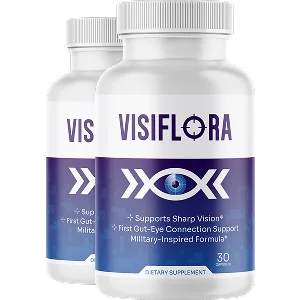
VisiFlora
Vitamin C, vitamin E and copper relate to the AREDS formula, but amounts matter and the studied combination also included zinc and lutein or beta-carotene. Astaxanthin, grape seed extract, rutin, quercetin, taurine, alpha lipoic acid, ginkgo, coleus and eyebright have no good evidence from large trials for macular degeneration.
Listed ingredients: Astaxanthin, Vitamin C, Vitamin E, Copper, Selenium, Chromium
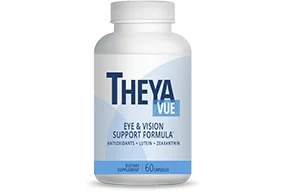
TheyaVue
Lutein, zeaxanthin, vitamins C and E and zinc relate to the AREDS and AREDS2 nutrients, though the listed doses should be compared with the studied amounts, and no copper is listed alongside zinc. Bilberry, rutin and calcium were not part of the AREDS trials and have no good evidence for macular degeneration.
Listed ingredients: Lutein, Zeaxanthin, Vitamin C, Calcium, Vitamin E, Bilberry Extract
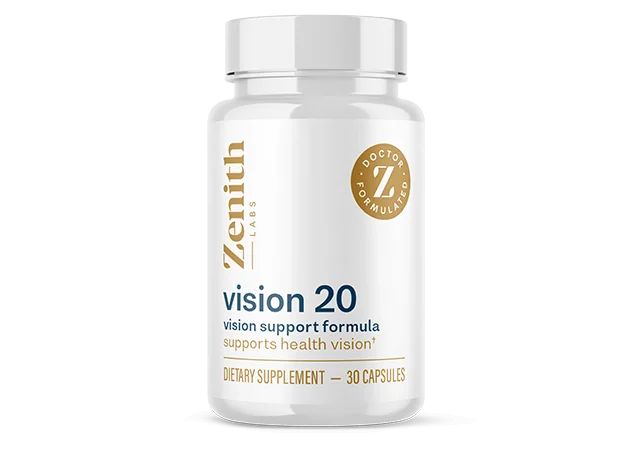
Vision 20
Lutein, zeaxanthin and zinc relate to AREDS2 research, and beta-carotene is a concern for smokers and former smokers. Lycopene, rose hips, taurine, grape seed and bilberry lack good evidence for macular degeneration, and the label does not show whether the amounts match the studied formula.
Listed ingredients: Lutein, Zeaxanthin, Zinc, Beta-carotene, Lycopene, Rose Hips
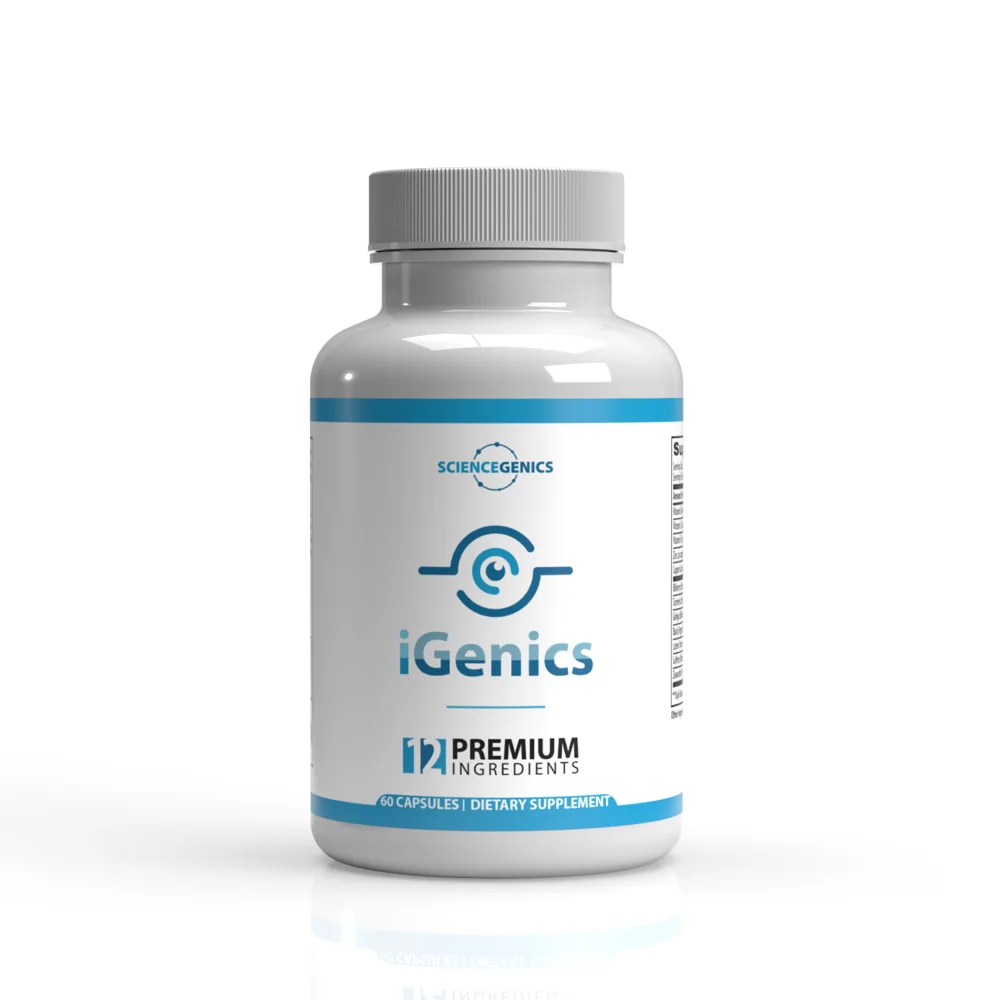
iGenics
The AREDS-2 ingredients are not itemized, so the doses cannot be compared with the studied formula. Saffron has limited, small-study evidence, while ginkgo, bilberry and turmeric with BioPerine have no good evidence from large trials for macular degeneration.
Listed ingredients: Ginkgo biloba, AREDS-2 formula ingredients (not itemized), Bilberry, Saffron, Turmeric + BioPerine
Frequently asked questions
Should I take an AREDS supplement if I have early macular degeneration?
The original AREDS study did not show a clear benefit for people with no or early AMD[4]. The benefit was seen in intermediate AMD or advanced AMD in one eye. An eye doctor can tell you which stage you have and whether a formula makes sense.
Can supplements reverse macular degeneration or bring back lost vision?
No. The studies looked at slowing progression to advanced AMD in certain people, not reversing damage[1]. Wet AMD is treated by an eye doctor, often with injections[3].
Do omega-3 fish oil capsules help macular degeneration?
In AREDS2, adding omega-3 fatty acids to the formula did not give an additional benefit[5]. Fish can still be part of a healthy diet, but capsules have not been shown to slow AMD.
Is saffron proven for macular degeneration?
Not yet. A 2024 review covered small studies, and the evidence remains limited[7]. It has not been shown to replace AREDS-type formulas.
Sources
- National Eye Institute: Age-Related Eye Disease Studies (AREDS/AREDS2)
- National Eye Institute: Age-related macular degeneration
- American Academy of Ophthalmology: What is macular degeneration?
- AREDS Research Group. Arch Ophthalmol 2001: high-dose vitamins C and E, beta carotene and zinc for AMD
- AREDS2 Research Group. JAMA 2013: lutein + zeaxanthin and omega-3 fatty acids for AMD
- NIH Office of Dietary Supplements: Zinc fact sheet
- BMJ Open Ophthalmol 2024: saffron therapy for age-related macular degeneration