Macular Degeneration Signs and Symptoms: What to Watch For and When to Get Care
Early macular degeneration often causes no symptoms, so many people learn they have it only at a routine eye exam. When symptoms do appear, they usually involve central vision: the part you use to read, recognize faces and drive[1]. This page covers the warning signs, how an eye doctor confirms the diagnosis, which changes call for urgent care, and what happens at the exam.
- Early AMD often has no symptoms, so regular dilated eye exams matter, especially with age or family history.
- Wavy straight lines, a central blind spot or blurry central vision are common signs, but only an eye exam can confirm the cause.
- A sudden change in central vision needs same-day or urgent eye care, because wet AMD is treated with injections and timing matters.
- Diagnosis relies on a dilated exam, often with an Amsler grid and OCT imaging.
- AREDS-type supplements were studied for people with intermediate or one-sided advanced AMD, not as a diagnosis tool or a substitute for care.
Common signs and symptoms of macular degeneration
Age-related macular degeneration (AMD) affects the macula, the small central area of the retina. It mainly changes central vision. Side (peripheral) vision usually stays intact[1].
Signs that people report include:
- Blurry or fuzzy vision, especially in the center of what you are looking at
- Straight lines, such as door frames or text lines, that look wavy or bent
- A dark, gray or empty spot in or near the center of vision
- Colors that look less bright or faded
- Needing more light to read, or trouble adjusting when moving from bright to dim rooms
These descriptions match those given by the National Eye Institute and the American Academy of Ophthalmology[1][2]. Many of them overlap with other common eye problems, so they do not confirm AMD on their own. Only an eye exam can tell the causes apart.
Symptoms often start in one eye. The other eye can cover for it, so changes are easy to miss until both eyes are affected. Covering one eye at a time and looking at a straight line or a printed page can help catch early changes.
Dry vs. wet AMD: how symptoms differ
There are two main forms. Dry AMD is more common. It develops gradually as the macula thins and small yellow deposits called drusen build up[1]. Vision loss is typically slow.
Wet AMD is less common but more serious. Abnormal blood vessels grow under the retina and can leak fluid or blood, which can damage the macula quickly[1][2]. Distortion, such as wavy lines, or a new blind spot that appears over days or weeks can be a sign of this change.
Dry AMD can progress to wet AMD. That is one reason ongoing monitoring matters once a person has been diagnosed[2].
Red flags: when to seek same-day or urgent eye care
Contact an eye doctor right away, and ask for a same-day or next-day visit, if you notice any of these:
- A sudden change in central vision
- Straight lines that newly look wavy, bent or broken
- A new dark or blank spot in the center of vision
- A noticeable change in your Amsler grid, if you already use one
- Sudden worsening in one eye, even if the other eye still sees well
These changes can signal wet AMD. Wet AMD is treated with injections into the eye, and timing can matter for how much vision is preserved[1]. Tell the office that the change is new and sudden when you call.
Seek emergency care for sudden vision loss, a curtain or shadow across your vision, or new flashes and a shower of floaters. These are not specific to AMD and may point to other urgent eye problems. Do not wait to see whether symptoms pass.
No supplement is a substitute for prompt evaluation. A person with new symptoms should see an eye doctor first.
How macular degeneration is diagnosed
AMD is diagnosed through a comprehensive eye exam with dilated pupils. The doctor looks at the back of the eye for drusen, pigment changes and signs of leaking vessels[1][2].
Common tests include:
- Visual acuity test: reading letters on a chart to measure sharpness
- Dilated eye exam: drops widen the pupils so the doctor can examine the retina and macula
- Amsler grid: a simple grid of straight lines used to check for distortion or missing areas in central vision
- Optical coherence tomography (OCT): a scan that creates cross-section images of the retina and can show swelling or fluid
- Fluorescein angiography: dye is injected into the arm, and photos track blood flow in the retina to locate leaking vessels
Not everyone needs every test. Your doctor chooses based on what the exam shows[1][2]. Doctors also stage the disease as early, intermediate or late. That staging guides follow-up timing and whether AMD-specific supplement formulas are relevant[3].
What to expect at the eye exam
Plan on a visit that may last an hour or more, because dilation takes time. Pupils may stay widened and light-sensitive for several hours, so bring sunglasses and arrange a ride home if possible.
Helpful things to bring or prepare:
- A list of all medicines and supplements, with doses
- Your current glasses or contact lenses
- Notes on when symptoms started and whether they affect one eye or both
- Family history of AMD, since relatives with the condition raise risk[1]
The doctor will review your history, test vision, check eye pressure, and examine the retina. If AMD is found, you may be given an Amsler grid for home use and told how often to return. Ask what stage the disease is in, whether either eye shows signs of wet AMD, and what changes should prompt a call.
Because blurred vision has many causes, the exam may also uncover other conditions. For example, blurry vision can come from dry eye, refractive error or cataracts, which are a clouding of the lens rather than a retinal problem[1]. Sorting these out is part of the visit.
Where nutrition and supplements fit
Supplements are not a way to diagnose AMD or replace eye care. They are relevant mainly after a doctor has staged the disease.
In the original Age-Related Eye Disease Study (AREDS), a high-dose combination of vitamins C and E, beta carotene and zinc was linked to a lower risk of progression to advanced AMD in people at high risk[4]. The follow-up study, AREDS2, tested adding lutein and zeaxanthin and omega-3 fatty acids. Adding them did not further reduce progression overall[5]. Lutein and zeaxanthin could be substituted for beta carotene in the formula[5]. The National Eye Institute notes these formulas are for people with intermediate AMD, or advanced AMD in one eye, not for everyone[3].
Zinc at high doses can affect copper levels, so supplement choices should be reviewed with a doctor[6]. Evidence for other ingredients is thinner. A 2024 review looked at saffron, and the evidence is still limited[7]. For general background, see lutein and zeaxanthin and broader eye health habits.
Eye supplements we have reviewed
Want to compare products? Read what the research says about nutrients for macular degeneration first, then compare the products below.
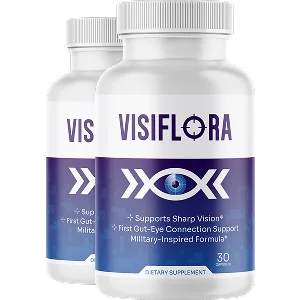
VisiFlora
Listed ingredients: Astaxanthin, Vitamin C, Vitamin E, Copper, Selenium, Chromium

TheyaVue
Listed ingredients: Lutein, Zeaxanthin, Vitamin C, Calcium, Vitamin E, Bilberry Extract
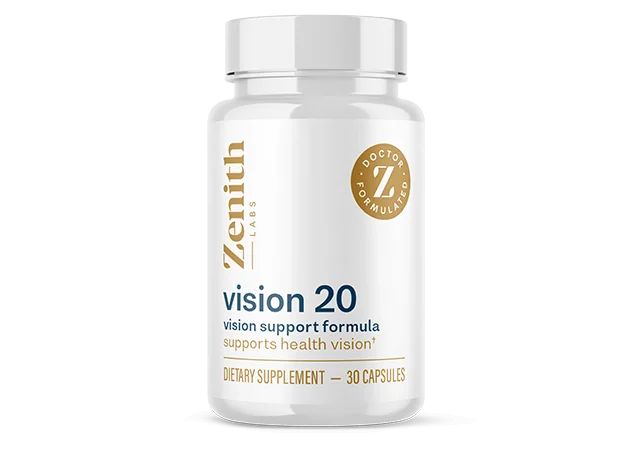
Vision 20
Listed ingredients: Lutein, Zeaxanthin, Zinc, Beta-carotene, Lycopene, Rose Hips

iGenics
Listed ingredients: Ginkgo biloba, AREDS-2 formula ingredients (not itemized), Bilberry, Saffron, Turmeric + BioPerine
Frequently asked questions
Can I have macular degeneration without noticing any symptoms?
Yes. Early AMD often causes no noticeable vision changes, and the other eye may compensate when one eye is affected[1]. A dilated eye exam can detect early signs such as drusen before symptoms begin.
What does an Amsler grid show?
An Amsler grid is a pattern of straight lines used to check central vision. Wavy, blurry or missing lines may indicate a problem with the macula[2]. Any new change should be reported to an eye doctor promptly rather than monitored at home.
How quickly should I be seen if my vision suddenly changes?
Call an eye doctor the same day and describe the change as new and sudden. Wet AMD can progress quickly and is treated with eye injections[1]. Sudden vision loss or a curtain over your vision calls for emergency care.
Will a supplement help if I have early signs of AMD?
The National Eye Institute says AREDS-type formulas were studied in people with intermediate AMD or advanced AMD in one eye[3]. Evidence for use in earlier stages is lacking. Ask your eye doctor whether any supplement fits your stage.
Sources
- National Eye Institute: Age-related macular degeneration
- American Academy of Ophthalmology: What is macular degeneration?
- National Eye Institute: Age-Related Eye Disease Studies (AREDS/AREDS2)
- AREDS Research Group. Arch Ophthalmol 2001: high-dose vitamins C and E, beta carotene and zinc for AMD
- AREDS2 Research Group. JAMA 2013: lutein + zeaxanthin and omega-3 fatty acids for AMD
- NIH Office of Dietary Supplements: Zinc fact sheet
- BMJ Open Ophthalmol 2024: saffron therapy for age-related macular degeneration