Protect Your Retina as You Age: A Macular Degeneration Guide
No habit or supplement can guarantee protection from macular degeneration, but a few steps have the best support: not smoking, eating a vegetable- and fish-rich diet, protecting the eyes from sunlight, and getting regular dilated eye exams[1][2]. A small group of people with intermediate disease may also be advised to take a specific vitamin formula. This guide explains each step, what the research shows, and why an eye doctor should guide the decisions.
- No step guarantees protection from macular degeneration, but not smoking is the clearest modifiable risk reduction.
- A diet rich in leafy greens, vegetables, and fish supports overall eye health; food comes before supplements.
- Dilated eye exams can find early changes, and an Amsler grid may help spot changes in central vision between visits.
- AREDS2-type vitamins were studied in people with intermediate AMD, or advanced AMD in one eye, not in healthy eyes.
- Sudden changes in central vision need prompt attention from an eye doctor, since wet AMD may need injections.
How can you protect your retina as you age?
Age-related macular degeneration (AMD) damages the macula, the part of the retina that handles sharp central vision. Age is the biggest risk factor, and it cannot be changed. Smoking and family history also matter[1]. Genetics and age cannot be controlled, but some daily habits can be.
The most useful steps are:
- Do not smoke, and ask a doctor for help quitting.
- Eat plenty of leafy greens, colorful vegetables, and fish.
- Wear sunglasses that block UV light.
- Keep blood pressure and other health conditions under control.
- Get a dilated eye exam on the schedule an eye doctor recommends.
- Learn the early warning signs, and check central vision at home if advised.
None of these steps is a cure or a guarantee. They are ways to support long-term eye health and to catch problems early, when options are widest.
Not smoking: the clearest step
Of all the changes people can make, smoking is the one most consistently tied to AMD risk. The National Eye Institute lists smoking as a risk factor for the disease[1]. The American Academy of Ophthalmology also names it among the factors that raise the chance of developing AMD[3].
Quitting is worthwhile at any age. It also matters for the vitamin question covered below, because one older vitamin formula carried a specific concern for people who smoke[4].
Blood pressure and heart health deserve attention too. Eye health organizations advise managing chronic conditions as part of caring for the eyes[2]. The evidence that blood pressure control by itself lowers AMD risk is less firm than the evidence on smoking, so blood pressure is best treated as part of overall health. A primary care doctor can set targets and monitor them.
Eating for retina health
Eye care groups recommend a diet rich in dark leafy greens, other vegetables and fruits, and fish, along with a healthy weight[5][2]. These foods supply carotenoids and omega-3 fats, which are found in the retina or studied for it.
Food is not the same as a supplement. Eating nutrient-rich foods is generally the first approach, and a doctor can advise whether a supplement adds anything for a particular person[5].
Simple ways to build the pattern:
- Add spinach, kale, or collard greens to meals several times a week.
- Include fish in the weekly menu.
- Choose whole foods over heavily processed ones.
- Keep portions and weight in a healthy range.
For a broader look at nutrients people often ask about after age 50, see eye vitamins over 50.
UV protection and sunglasses
Sunglasses that block UV light are a standard part of eye-protection advice[2]. The research linking sunlight exposure to AMD specifically is less settled than the research on smoking, so UV protection is best seen as a low-cost habit with general benefits for the eyes. It is also relevant to other age-related conditions such as cataracts.
Look for labels that say the lenses block 99% to 100% of UV rays, and wear them outdoors, including on cloudy days.
Dilated eye exams and the Amsler grid
AMD can develop slowly, and early changes may not be noticeable. A dilated eye exam lets an eye doctor examine the retina and look for early signs, often before symptoms appear[2]. Adults should ask their doctor how often to be examined, especially after age 60 or with a family history of AMD.
At home, an Amsler grid is a simple chart of straight lines that can reveal changes in central vision. Someone with AMD may notice lines that look wavy, blurry, or missing[3]. If the doctor recommends using one, the usual approach is to check each eye separately, wearing any reading glasses, in good light.
Contact an eye doctor promptly if lines look distorted, if a dark or blank spot appears in the center of vision, or if central vision changes suddenly. Not every episode of blurry vision means AMD, but new changes in central vision should be examined. More detail on what to watch for is on the signs and symptoms page.
Who AREDS2 vitamins are for
The Age-Related Eye Disease Studies tested high-dose nutrient formulas in people with AMD. The first study found that a combination of vitamins C and E, beta carotene, and zinc reduced the risk of progressing to advanced AMD in people at higher risk[6]. The follow-up, AREDS2, tested adding lutein and zeaxanthin and omega-3 fatty acids[7]. The National Eye Institute summarizes the results and the formulas[4].
The key point is who these studies applied to. The benefit was seen in people with intermediate AMD, or advanced AMD in one eye. It was not shown for people with healthy eyes or very early changes[4]. Anyone who is simply trying to protect their retina should talk to an eye doctor before starting a high-dose product.
Several cautions apply:
- In AREDS2, lutein and zeaxanthin were tested as a replacement for beta carotene, and adding omega-3 fatty acids did not show an extra benefit[7].
- Beta carotene has been linked to a higher lung cancer risk in people who smoke or used to smoke, which is why the AREDS2 version is often preferred for them[4].
- The AREDS formulas contain high-dose zinc[6]. The Office of Dietary Supplements notes that long-term high zinc intake can lead to copper deficiency[8].
Saffron has also been studied for AMD. A 2024 review looked at the research, but the evidence is limited and it is not a replacement for the AREDS-type formulas or medical care[9]. For a deeper look, see the AREDS2 formula guide and the saffron and eyesight guide.
When injections are needed
AMD comes in two main forms. Dry AMD is more common and progresses slowly. Wet AMD is less common but can cause faster vision loss because abnormal blood vessels leak under the macula[1][3]. Vitamins are not a treatment for wet AMD.
Wet AMD is typically managed by an eye specialist, often with injections into the eye that target the growth of abnormal blood vessels[1]. Timing matters, which is one reason to report sudden changes quickly instead of waiting for the next routine visit. For an overview of care options, see treatment and home care.
Eye supplements we have reviewed
Want to compare products? Read what the research says about nutrients for macular degeneration first, then compare the products below.
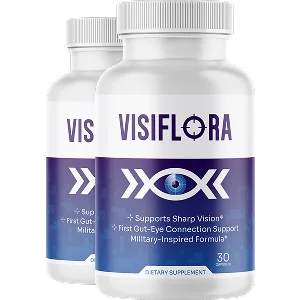
VisiFlora
Listed ingredients include vitamins C and E, copper, and selenium. Vitamins C and E and copper appear in the AREDS formulas, but this product's doses are not stated here and the study results apply to specific doses in people with intermediate AMD. Astaxanthin, grape seed extract, rutin, quercetin, taurine, alpha lipoic acid, ginkgo, coleus, and eyebright have no good evidence from the sources reviewed for protecting the retina in AMD.
Listed ingredients: Astaxanthin, Vitamin C, Vitamin E, Copper, Selenium, Chromium
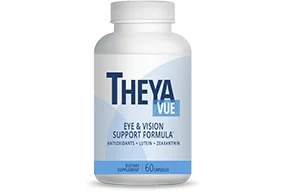
TheyaVue
Lutein, zeaxanthin, vitamins C and E, and zinc relate to the AREDS2-type approach, which was studied in people with intermediate AMD. Whether the amounts match the studied formula is not established here, and high zinc intake can contribute to copper deficiency. Bilberry, rutin, and calcium have no good evidence from these sources for AMD.
Listed ingredients: Lutein, Zeaxanthin, Vitamin C, Calcium, Vitamin E, Bilberry Extract
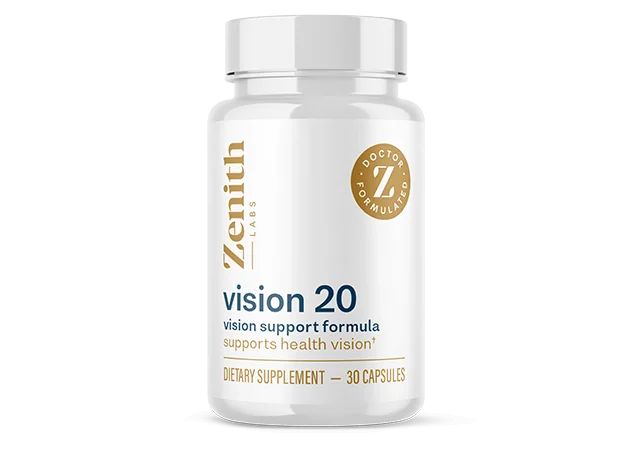
Vision 20
Lutein, zeaxanthin, and zinc relate to the AREDS2 research, but beta carotene was part of the original formula and has been linked to lung cancer risk in people who smoke or used to smoke. Lycopene, rose hips, taurine, grape seed extract, and bilberry have no good evidence from these sources for protecting the retina in AMD. Its doses are not stated here, so it should not be assumed to match the studied formula.
Listed ingredients: Lutein, Zeaxanthin, Zinc, Beta-carotene, Lycopene, Rose Hips
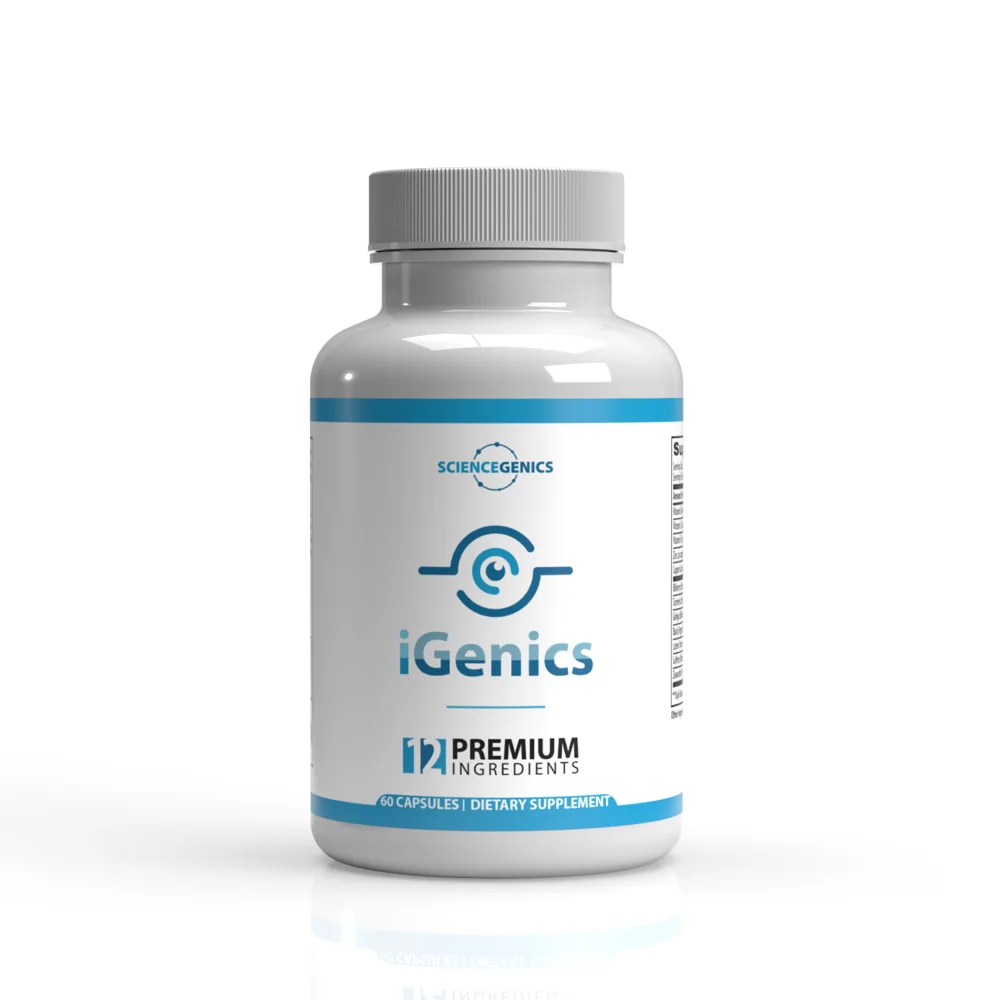
iGenics
The label mentions AREDS-2 formula ingredients without itemizing them, so it cannot be compared to the studied doses. Saffron has been studied for AMD, but evidence is limited. Ginkgo, bilberry, and turmeric with BioPerine have no good evidence from these sources for protecting the retina in AMD. An eye doctor should review any such product.
Listed ingredients: Ginkgo biloba, AREDS-2 formula ingredients (not itemized), Bilberry, Saffron, Turmeric + BioPerine
Frequently asked questions
Can supplements prevent macular degeneration?
No supplement has been shown to prevent AMD. The AREDS formulas were studied for slowing progression in people who already had intermediate or advanced disease[4]. Healthy people should focus on diet, not smoking, and regular exams, and ask an eye doctor before taking high-dose vitamins.
How often should I use an Amsler grid?
The right schedule depends on the person, so an eye doctor should set it. The grid is a home check and does not replace a dilated exam[3]. New distortion, wavy lines, or a blank spot in central vision is a reason to call an eye doctor promptly.
Is AREDS2 safe for people who smoke?
The original AREDS formula contained beta carotene, which has been linked to a higher lung cancer risk in people who smoke or used to smoke. AREDS2 replaced it with lutein and zeaxanthin[4][7]. Anyone considering these vitamins should review the choice with an eye doctor.
Do blood pressure and sunglasses really matter for the retina?
Both are standard parts of eye-health advice[2]. The evidence for them is less firm than for smoking when it comes to AMD specifically. They are low-risk habits that support general health and eye protection.
Sources
- National Eye Institute: Age-related macular degeneration
- National Eye Institute: Keep your eyes healthy
- American Academy of Ophthalmology: What is macular degeneration?
- National Eye Institute: Age-Related Eye Disease Studies (AREDS/AREDS2)
- American Academy of Ophthalmology: Diet and nutrition for eye health
- AREDS Research Group. Arch Ophthalmol 2001: high-dose vitamins C and E, beta carotene and zinc for AMD
- AREDS2 Research Group. JAMA 2013: lutein + zeaxanthin and omega-3 fatty acids for AMD
- NIH Office of Dietary Supplements: Zinc fact sheet
- BMJ Open Ophthalmol 2024: saffron therapy for age-related macular degeneration